Problemet
Lager är pengar som sitter på en hylla och ett batchnummer som saknas är ett regelefterlevnadsproblem. Att spåra produkt för hand betyder överraskande lagerslut och luckor i spårbarhet.
Det gamla sättet, och vad det kostar
En papperslagerbog eller ett kalkylark, räknat när någon kommer ihåg det, med batchnummer loggade ad hoc.
Typisk kostnad
Kapital bundet i överlagring, förlorad intäkt från lagerslut och risken för en ouppspårbar produkt.
Personalkostnad
Tid för inventering och ombeställning och rekonstruering av batchposter i efterhand.
Sulaia-sättet
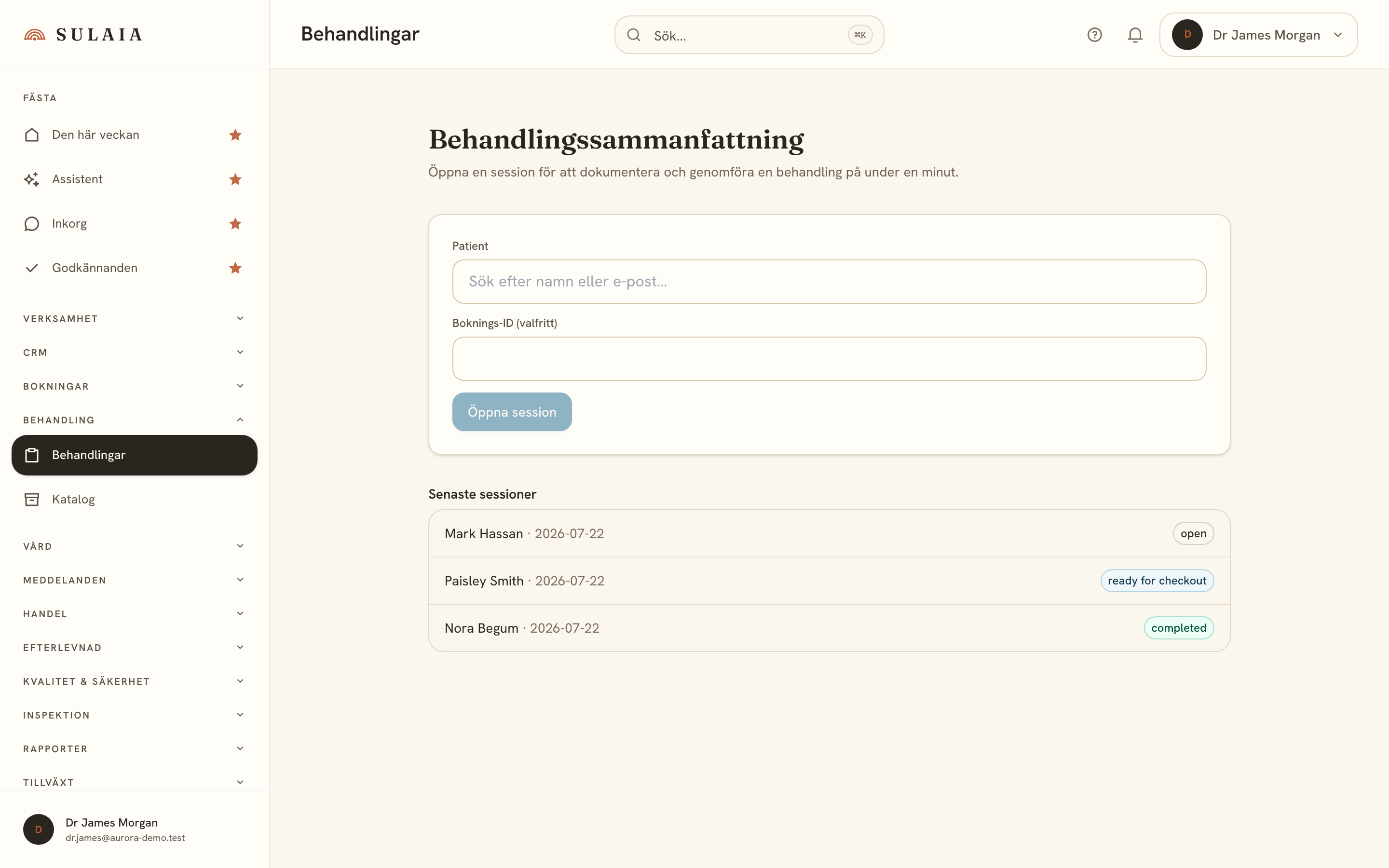
Varje produkt som används i en behandling registreras mot sitt batch automatiskt, lagernivåer uppdateras allt eftersom och låga lagernivåer flaggas för ombeställning innan du tar slut.
Vad du får
- Varje produkt spårad till sitt batch
- Lågt lager flaggat innan det biter
- Mindre kapital bundet på hyllan